RISE with SAP vs GROW with SAP — Which Is Right for Your Business in 2026?
The SAP ecosystem has never offered more clarity — or more confusion — than it does in 2026. Two flagship cloud journeys dominate the conversation: RISE with SAP and GROW with SAP. Both promise a path to SAP S/4HANA Cloud. Both are subscription-based. Both are sold by the same company.
So why do so many organizations still pick the wrong one?
The answer lies not in the products themselves, but in the questions you ask before choosing.
The Fundamental Distinction

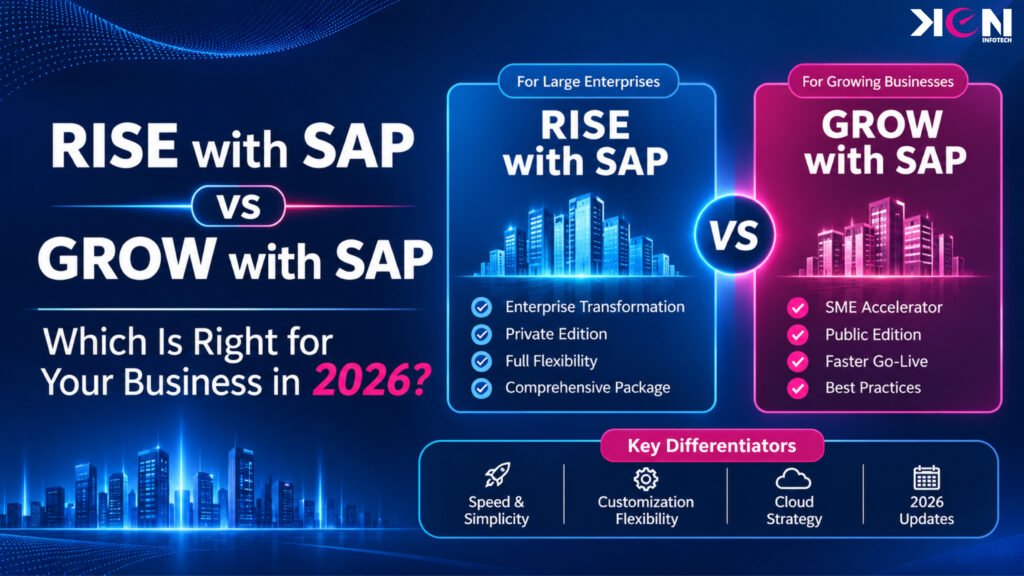
Before diving into features and pricing, understand this: RISE and GROW are not competing products. They are two different vehicles heading to the same destination — SAP S/4HANA Cloud — designed for fundamentally different passengers.
RISE with SAP is a holistic business transformation package. It bundles SAP S/4HANA Cloud (private edition), infrastructure, tools, services, and transformation methodology into a single commercial offering. It’s designed for large enterprises that need to migrate complex, highly customized ERP landscapes.
GROW with SAP is a standardized, cloud-first adoption offering. It delivers SAP S/4HANA Cloud (public edition) with preconfigured best practices, faster implementation timelines, and a lower barrier to entry. It’s designed for growing businesses — typically mid-market companies or subsidiaries — that want speed, simplicity, and scalability without a heavy IT footprint.
RISE with SAP: The Enterprise Transformation Engine

Who it’s for
Large enterprises with deeply customized ERP systems — think Fortune 500 companies, complex multinational operations, or organizations running legacy SAP ECC with hundreds of Z-programs and integrations.
What you get
- SAP S/4HANA Cloud, private edition (single-tenant, more flexibility for customizations).
- Business Process Intelligence tools.
- SAP Business Network Starter Pack.
- Cloud infrastructure (hyperscaler of your choice — AWS, Azure, Google Cloud).
- SAP Business Technology Platform entitlements.
- Access to RISE migration programs, including the Conversion Factory approach.
The real value proposition
RISE isn’t just software — it’s a commercial wrapper around your entire ERP transformation journey. It simplifies the commercial model (one contract, one vendor, one SLA) and gives large organizations a single throat to choke when things go sideways.
In 2026, RISE has matured significantly. The clean core methodology is now central to every RISE engagement — SAP pushes hard to reduce custom code and move extensions to BTP (Business Technology Platform), setting clients up for smoother future upgrades.
Trade-offs to consider
- Higher cost — RISE is premium priced; total cost of ownership (TCO) conversations are complex.
- Longer timelines — migrations of this scale rarely finish in under 18 months.
- Change management burden — the business transformation is real; the technology is only half the challenge.
- Private edition limitations — you’re not always on the latest innovations as fast as public cloud customers.
GROW with SAP: The SME Accelerator

Who it’s for
Mid-market companies, fast-growing businesses, divisions of larger enterprises, or organizations implementing SAP for the first time. If you’re not replacing an existing SAP landscape, GROW is almost certainly your starting point.
What you get
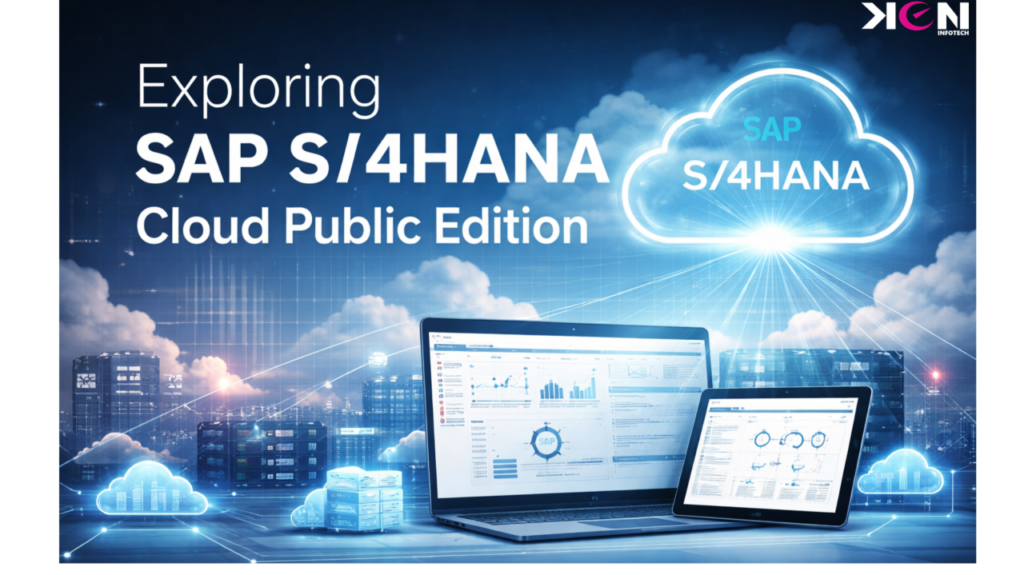
- SAP S/4HANA Cloud, public edition (multi-tenant, SAP-managed, always current).
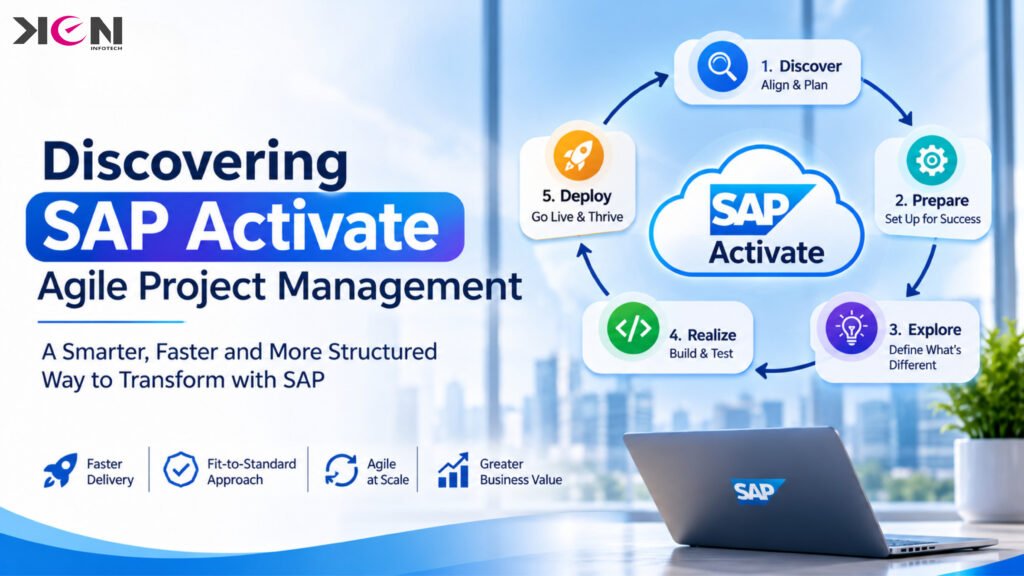
- Preconfigured best-practice content (Activate methodology).
- Embedded analytics and reporting.
- Access to the SAP Store ecosystem.
- SAP Learning Hub access.
- Partner-led implementations through the GROW partner program.
The real value proposition
GROW’s superpower is speed and simplicity. Because it runs on the public edition of S/4HANA Cloud, SAP manages the infrastructure, handles upgrades twice a year automatically, and delivers innovations faster. You’re essentially renting a best-in-class ERP without the operational overhead.
In 2026, the GROW partner ecosystem has exploded. Certified system integrators can now deliver initial go-lives in as few as 3–6 months using standardized accelerators, which was unthinkable with traditional SAP projects.
Trade-offs to consider
- Less customization room — the public edition enforces clean core strictly; if you have unique processes that don’t map to SAP standard, you’ll need BTP extensions.
- Fit-to-standard discipline required — GROW forces process redesign; organizations with “we’ve always done it this way” cultures will struggle.
- Not for complex landscapes — if you’re decommissioning 15 legacy systems, GROW alone won’t carry you there.
The Decision Framework: 5 Questions to Ask
Before your leadership team debates features, answer these five questions honestly.
1. What are you replacing? If you’re migrating from SAP ECC or a heavily customized ERP, RISE is the engineered path. If you’re replacing a non-SAP system or starting greenfield, GROW is your lane.
2. How much customization do you need? GROW enforces SAP standard processes. If your competitive advantage lives in unique processes that don’t fit best-practice templates, RISE (private edition) gives you more room — though SAP will still push you toward clean core.
3. What’s your timeline pressure? Boards and private equity firms demanding results in 12 months favor GROW. Complex enterprise transformations that will take 2–4 years are RISE territory.
4. What’s your IT operating model? If you want to stop managing SAP infrastructure entirely, GROW’s public edition gives you that. If you need control over your environment for regulatory, security, or integration reasons, RISE’s private edition preserves it.
5. What’s your budget structure? GROW has a more predictable, user-based subscription model. RISE involves larger upfront commitment and a more complex commercial negotiation. Both require a clear 5-year TCO model — don’t evaluate on year-one costs alone.
What’s Changed in 2026
A few things have shifted that every SAP decision-maker needs to know:
SAP is doubling down on AI. Both RISE and GROW now include Joule, SAP’s AI copilot, as a core component. But the depth of AI capabilities — particularly in supply chain, finance, and HR — is expanding faster on the public edition (GROW). If AI-driven automation is a board priority, that’s a point in GROW’s favor.
Clean core is no longer optional. SAP has made clear that the path forward runs through BTP for extensions. Whether you choose RISE or GROW, plan your extensibility strategy around BTP from day one.
GROW is moving upmarket. Two years ago, GROW felt like an SME product. In 2026, it increasingly handles mid-market complexity that previously required RISE. SAP has invested heavily in industry-specific content for GROW. If your annual revenue is under €1B, it’s worth a serious re-evaluation.
RISE migrations are accelerating. The tooling for ECC-to-S/4HANA cloud migrations has matured significantly. SAP’s Signavio process intelligence, combined with the Selective Data Transition approach, means RISE engagements that used to take 4 years can now be done in 2–2.5 years for many organizations.

The worst outcome isn’t choosing RISE when you needed GROW, or vice versa. The worst outcome is spending 18 months in evaluation paralysis while your competitors move.
If you’re a large enterprise with a complex ECC landscape: RISE with SAP is almost certainly your path. Invest in a strong systems integrator, commit to clean core from day one, and build your BTP strategy in parallel.
If you’re a mid-market company, a growing business, or a subsidiary looking to modernize: GROW with SAP will get you to value faster than anything SAP has offered before. Trust the standard processes. Resist the urge to customize everything.
And if you’re genuinely on the fence — run a structured fit-gap analysis against both. The answers are usually in your processes, not in the product brochures.
Comments