Discovering SAP Activate Agile Project Management
A practitioner’s guide to one of the most structured yet agile frameworks in enterprise transformation.
If you’ve ever been part of an SAP implementation, you’ve likely heard the word “Activate.” But knowing the name and truly understanding the framework are two very different things. After working through multiple SAP S/4HANA and cloud migrations, I wanted to share what SAP Activate really means in practice — and why it has become the go-to methodology for organizations serious about agile delivery in the enterprise world.
What is SAP Activate?
SAP Activate is SAP’s official methodology for implementing and deploying SAP solutions. It combines three core building blocks: SAP Best Practices (pre-configured content), guided configuration (methodology-guided setup tools), and an agile project methodology rooted in Scrum principles.
Launched to replace the older ASAP (Accelerated SAP) methodology, SAP Activate was designed for the cloud era — built to support faster, leaner implementations while keeping the rigor that complex enterprise deployments demand.
The five phases of SAP Activate

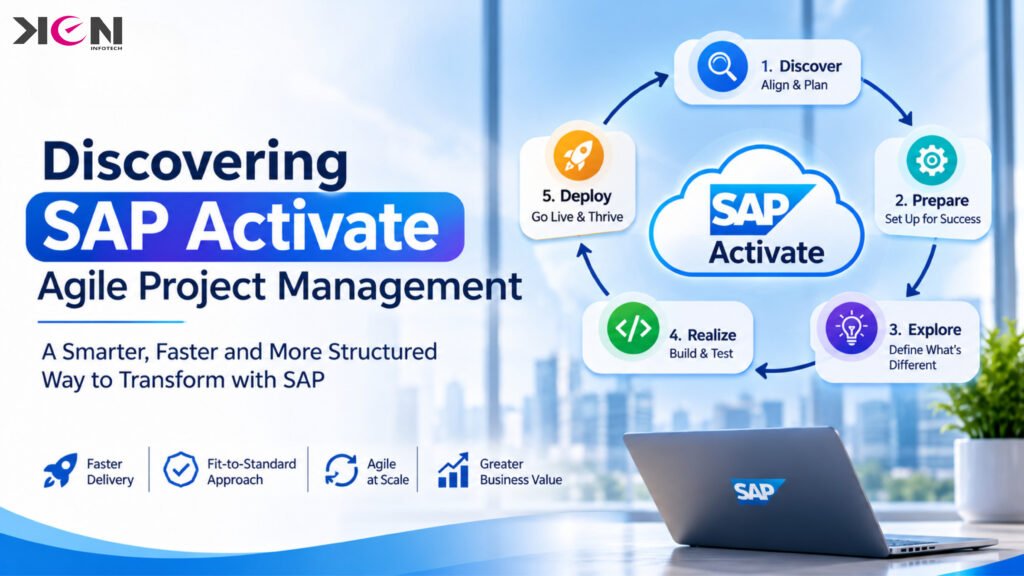
SAP Activate structures every project across five sequential phases, each with clear deliverables, workstreams, and quality gates:
1. Discover
This phase is about creating alignment before a single configuration is touched. The project team evaluates the business case, explores SAP Best Practices through demo systems, and sets expectations on scope. It’s where the “why” gets defined clearly — before the “how” consumes everyone’s attention.
2. Prepare
Once committed, the project is formally set up. This means establishing governance, onboarding the team, setting up the project environment, and running initial fit-to-standard workshops. A strong Prepare phase is often the difference between projects that run on schedule and those that spiral.
3. Explore
The Explore phase is where SAP Activate distinguishes itself from traditional waterfall methods. Rather than writing lengthy business requirement documents upfront, teams run structured fit-to-standard workshops — walking through SAP’s pre-configured business processes and identifying only what truly needs to be configured differently. Delta requirements — the genuine gaps between standard and business need — are captured as backlog items.
4. Realize
This is the heart of the agile delivery cycle. The delta requirements captured in Explore are developed, configured, tested, and validated in iterative sprints. Integration testing, user acceptance testing, and data migration activities all happen here. The agile cadence keeps stakeholders continuously informed and enables course corrections without derailing the timeline.
5. Deploy
The final phase prepares the organization for go-live. Cutover planning, end-user training, hypercare readiness, and production system setup all converge here. A well-executed Deploy phase means go-live is an event, not a crisis.
Why agile + SAP is not a contradiction
A common misconception is that enterprise SAP projects are too large, too complex, or too compliance-heavy to run agile. SAP Activate puts that to rest.
The methodology embraces Scrum — with sprint planning, daily standups, sprint reviews, and retrospectives baked into the Realize phase. But it pairs agile delivery with a structured governance model: phase gates, quality checklists, and role definitions that give executives and steering committees the visibility they need.
This hybrid approach is what makes SAP Activate so effective at scale. You get the speed and adaptability of agile without sacrificing the audit trail, documentation standards, and risk controls that regulated industries require.
Key roles in an SAP Activate project
Understanding the framework also means understanding who does what:
- Product Owner — Represents the business, owns the backlog, and prioritizes delta requirements
- Scrum Master / Agile Coach — Facilitates sprints, removes blockers, and protects the team
- Solution Architect — Guides fit-to-standard decisions and integration design
- Key Users — Business-side subject matter experts critical for workshops and UAT
- Functional & Technical Consultants — Execute configuration, development, and testing in sprints
SAP Activate in the cloud context

One of the most significant evolutions of SAP Activate is its alignment with SAP’s cloud-first direction. Whether you’re implementing SAP S/4HANA Cloud Public Edition, SAP SuccessFactors, SAP Ariba, or the full Business Technology Platform (BTP) stack, Activate provides tailored roadmaps for each solution.
The cloud editions lean even more heavily on the fit-to-standard principle — customization is deliberately constrained to preserve upgrade paths. This forces a valuable discipline: adopt the standard where it works, and only extend where the business case is undeniable.
Lessons from the field
A few things I’ve seen make or break SAP Activate projects:
- Executive sponsorship in Discover is non-negotiable. Projects that skip serious stakeholder alignment in phase one spend the rest of the project relitigating scope.
- Fit-to-standard workshops only work if the right people are in the room. Key users who know the actual business process — not just the IT team — make all the difference.
- Backlog hygiene in Explore pays dividends in Realize. Vague or poorly scoped delta requirements become expensive sprint failures later.
- Hypercare planning starts in Deploy, not after go-live. Having a defined support model, escalation path, and known-issue tracker before cutover removes chaos from the critical first weeks.
Wrapping up
SAP Activate is not just a project methodology — it’s a mindset shift toward outcome-focused, iterative delivery in the context of enterprise SAP. Organizations that invest in understanding the framework — not just following the checklist — consistently deliver faster implementations, higher adoption rates, and more sustainable solutions.
Whether you’re an SAP consultant, a project manager stepping into your first SAP engagement, or a business leader evaluating your next transformation, SAP Activate is the framework worth mastering.



Comments