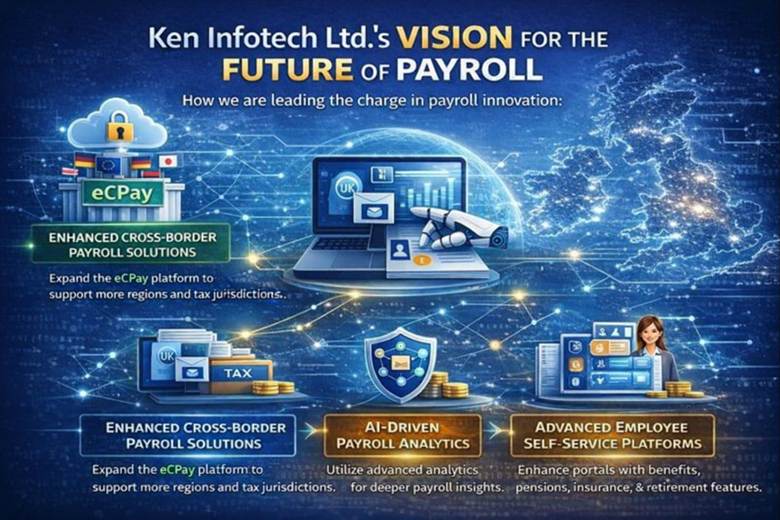
Payroll management is undergoing a significant transformation, particularly in countries such as the UK and Germany, where client requirements and regulatory expectations are evolving rapidly. These changes are primarily driven by the need to improve compliance, enhance data security, and simplify cross-border payroll management.
At Ken Infotech Ltd, we closely monitor these developments to help organizations stay ahead of regulatory changes. In this article, we share insights into how the latest advancements in EC Payroll are reshaping payroll operations for businesses worldwide.
What Is EC Payroll?
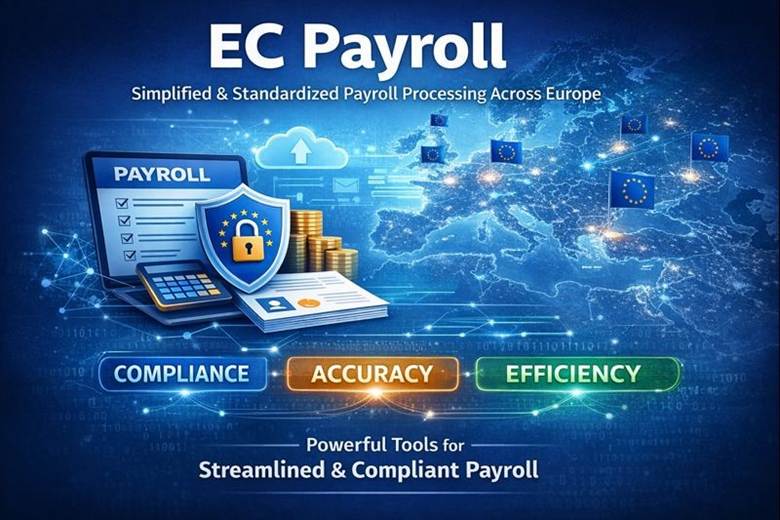
EC Payroll refers to a set of systems and frameworks designed to simplify and standardize payroll processing, particularly across European countries. Although the UK has exited the EU, its payroll systems continue to evolve in alignment with European best practices, with a strong focus on compliance, accuracy, and efficiency.
The objective of EC Payroll is to reduce complexity while improving payroll efficiency—especially for organizations operating across borders. At Ken Infotech Ltd, our focus extends beyond technical upgrades; we are committed to building a secure, compliant, and future-ready payroll ecosystem for global businesses.
See content credentials
Key Features of the New EC Payroll Systems in the UK and Germany
1. Cloud-Based Digital Integration
One of the most significant shifts in both the UK and Germany is the adoption of cloud-based payroll solutions. These platforms allow organizations to access payroll data securely from anywhere in the world, making payroll management more seamless for companies with multinational teams.
2. Real-Time Payroll Reporting
Payroll data in the UK and Germany is now submitted in real time to tax authorities and social security systems. This approach ensures greater accuracy, improved compliance, and reduced delays, keeping payroll records consistently up to date.
3. AI-Powered Payroll Automation
Artificial Intelligence is playing a growing role in payroll operations by automating calculations, tax deductions, and benefits administration. AI-powered payroll systems reduce manual errors, speed up processing, and help organizations remain compliant with local regulations.
4. Simplified Cross-Border Payroll Management
Managing payroll across multiple countries can be complex for multinational organizations. The new EC Payroll framework simplifies this process by harmonizing payroll systems while ensuring compliance with country-specific tax and social security regulations. This enables centralized payroll management with greater confidence.
5. Employee Self-Service Portals
Employee self-service portals are becoming increasingly common, allowing employees to directly access pay slips, tax information, and benefits data. This improves transparency, reduces administrative workload for HR teams, and helps build trust between employers and employees.
6. GDPR Compliance and Data Protection
With strict data protection regulations such as GDPR, safeguarding employee data has become a top priority. Modern payroll systems are designed to ensure that sensitive employee information is stored, processed, and transferred securely, helping organizations remain compliant while protecting employee privacy.
What Are the New Payroll Systems Called?
As payroll systems continue to evolve across Europe and beyond, the following platforms play a key role:
- Germany – ELStAM (Elektronische Lohnsteuerabzugsmerkmale): Enables real-time tax reporting and automated tax deductions, significantly reducing manual processes and HR workload.
- UK – Real-Time Information (RTI): The backbone of UK payroll reporting, allowing employers to submit payroll data directly to HMRC during payroll processing to ensure accuracy and compliance.
- ePay: An emerging cloud-based payroll solution designed to simplify cross-border payroll management while ensuring compliance with local tax and regulatory requirements.
Together, ELStAM, RTI, and ePay are transforming payroll operations by improving efficiency, compliance, and security.
Impact of Payroll Changes in the UK
Following Brexit, several changes have been introduced to the UK payroll system, particularly in tax reporting:
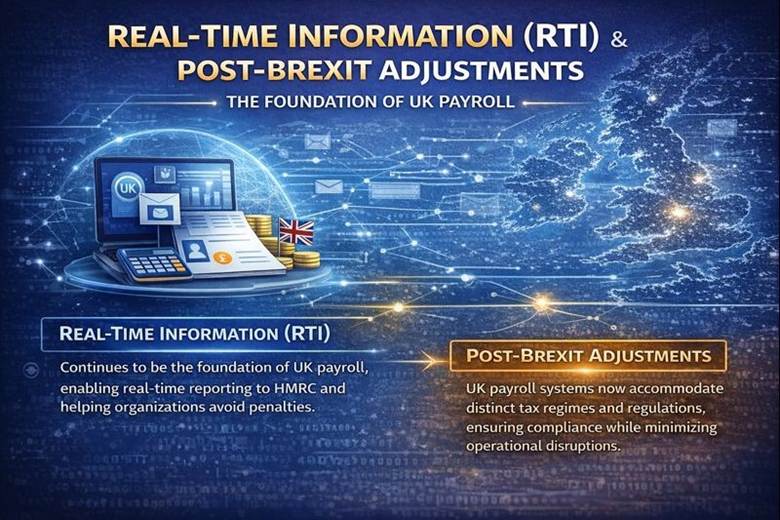
- Real-Time Information (RTI): Continues to be the foundation of UK payroll, enabling real-time reporting to HMRC and helping organizations avoid penalties.
- Post-Brexit Adjustments: UK payroll systems now accommodate distinct tax regimes and regulations, ensuring compliance while minimizing operational disruptions.
See content credentials
Impact of Payroll Changes in Germany
Germany’s payroll system, while traditionally complex, is undergoing a major digital transformation:
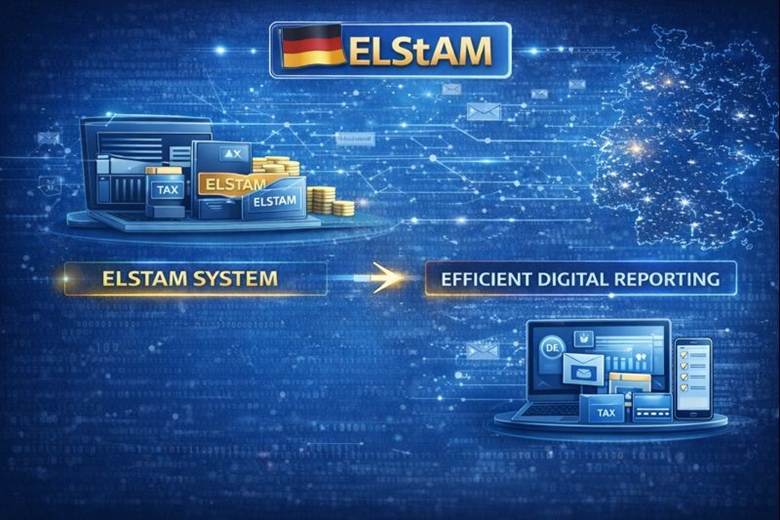
- ELStAM System: Automates tax deductions and enables real-time reporting, eliminating reliance on paper-based filings and reducing errors.
- Efficient Digital Reporting: Integration with social security and tax systems has reduced manual paperwork and simplified compliance for employers.
See content credentials
What Does This Mean for Employers and Employees?
For Employers
- Reduced administrative burden through automation
- Improved compliance and lower risk of penalties
- Increased cost efficiency and streamlined payroll operations
For Employees
- Greater transparency through self-service access
- Faster issue resolution and accurate payments
- Enhanced data security in line with GDPR requirements
Conclusion: The Future of Payroll Is Digital
The future of payroll is automated, secure, and intelligent. With platforms such as RTI, ELStAM, and ePay, organizations now have access to powerful tools that simplify payroll processing while ensuring full compliance.
At Ken Infotech Ltd, we are committed to delivering comprehensive and future-ready payroll solutions for businesses operating in the UK, Germany, and across Europe. By embracing digital payroll transformation, organizations can stay ahead of regulatory changes, improve efficiency, and build lasting trust with their employees.
The automated, secure, and smart future of payroll is here with Ken Infotech Ltd.
See content credentials